
What is a fun fact about myself?
I absolutely love Halloween and everything spooky — I have an entire wardrobe dedicated to spooky season.
Who am I outside of therapy?
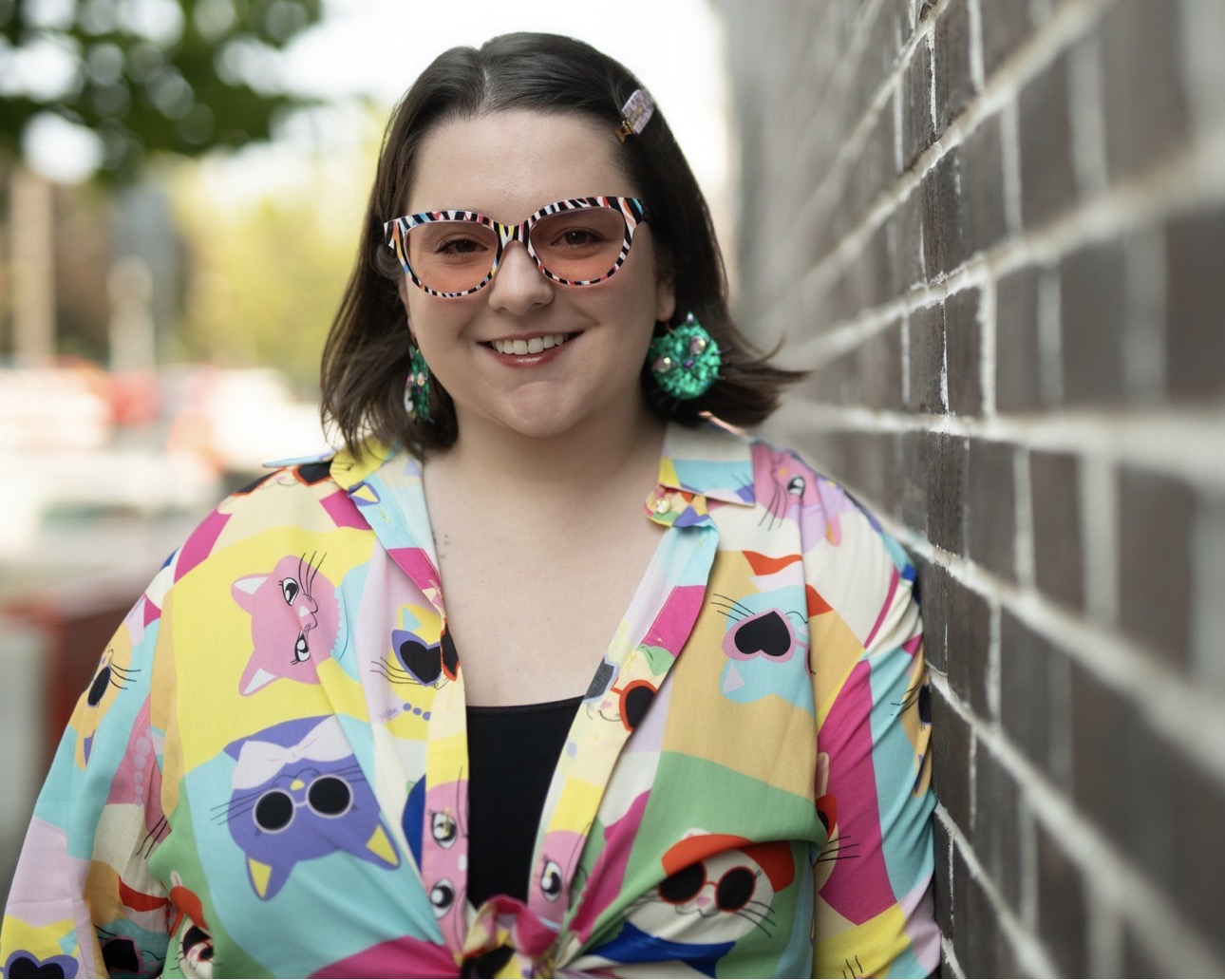
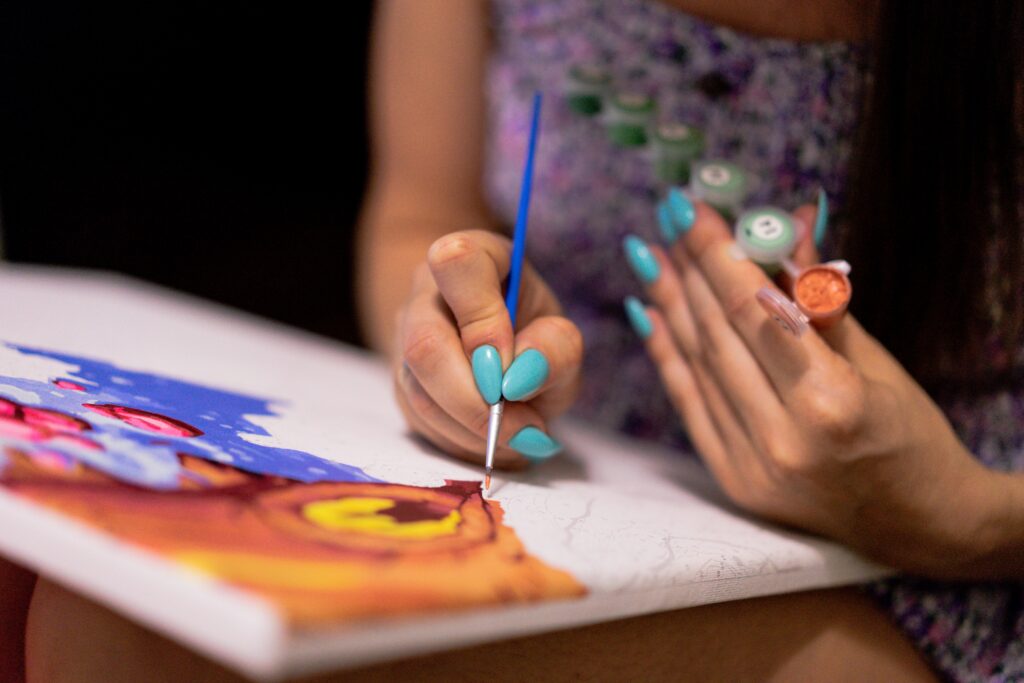
You’ll probably find me curled up with a Romantasy novel in my cozy reading nook, up to three cats piled on my lap, while my husband plays video games beside me. Other nights, I’m at game night with friends, deep into Magic: The Gathering, Catan, or whatever else is on the table. I collect novelty handbags and dabble in paint by numbers — since I have zero free-hand painting skills to speak of! I live for time with my chosen family scattered across the country, a good bowl of mac and cheese, and being as silly and playful as I possibly can.
What can you expect as my client?
Our relationship is at the heart of the work — whether you’re coming in as an individual or as a couple, I believe real change happens through connection, not through a checklist of things to fix. You can expect a genuine partnership: we’ll co-create the goals we’re working toward together, and I’ll be honest and transparent with you along the way, so you always feel like an active participant in your own healing rather than someone it’s happening to.
Part of what I offer is helping you find your way back to your own sense of aliveness — or discovering it for the first time — through your relationship with yourself, with each other, and with the world you’re moving through. That might mean slowing down together, noticing what’s happening in your body as we talk, or building your capacity to feel more, not less, without it becoming too much to hold. If talk therapy alone has never quite gotten you or your relationship where you needed to go, you’re not the only ones — I bring a lot of curiosity, playfulness, and creativity into the room, and that’s part of why I bring in the body, movement, art, music, and play when they’re useful, because sometimes words just aren’t enough.
I also won’t treat what’s bringing you in as something simply wrong with you or your relationship. So much of what brings people to therapy is the result of layered systemic and social influences — the identities you hold, the systems you’ve had to navigate, the environments you’ve moved through, the dynamics you’ve inherited — and I’ll help you understand your experience through that wider lens, not just an individual one. My hope is that you leave our work together with a greater sense of agency, more comfort in your own body, more self-compassion, and a real sense of empowerment in how you move through the world and the relationships you’re in.
How did I become a therapist?
My desire to do this work comes from the real gaps I’ve seen in the mental health care system — both as a client moving through every level of care, from inpatient to outpatient, and as a staff member in residential treatment, spending time on the floor with clients as well as in the conversations that happened behind closed doors. From both sides, I’ve watched people fall through the cracks, and I’ve fallen through a few myself. It’s the folks whose identities live at the more nuanced intersections who get lost the most often — overlooked, misread, or treated like a diagnosis instead of a person. That’s what led me here: I wanted to be part of closing that gap instead of just naming it, and to offer the kind of care that actually sees the whole person in front of them.
I became a therapist because I’ve seen what’s possible on the other side of that gap — meaningful, lasting change, not just for me, but in close friends and in clients too. What made that change possible wasn’t luck or a superpower; it was having the right team, real access to the resources that help you navigate the systemic challenges shaping daily life, and the chance and willingness to learn to trust and listen to yourself again. That’s the kind of care I want to offer: given the right support and enough time, I don’t think that kind of change is out of reach for anyone.


Before I ever set foot in a clinical setting, I spent 15 years immersed in the performing and fine arts — years that shaped my passion for expression through music, movement, art, drama, and play. That foundation followed me into residential treatment, where I worked as part of the support staff for adults navigating depression, anxiety, addiction, and complex trauma, spending time on the floor with clients and leading groups on mindfulness and coping skills. From there, I moved into a similar support role in residential care for adolescents, working alongside clients navigating eating disorders, body image, identity, and overlapping mental health challenges, all while providing queer-affirming care.
Over the past year, I’ve moved into direct clinical work, providing trauma-informed therapy to individuals, couples, families, and children in community behavioral health settings. In that time, I’ve worked with veterans, families, couples, and children, as well as clients navigating chronic illness and chronic pain, body image concerns, disordered eating, neurodivergence, complex trauma, depression, anxiety, and addiction. In my work with couples and families, that’s included polyamory and non-traditional relationship structures, communication struggles, mismatched desire, and other challenges related to sex and intimacy.
My clinical approach is relational, systemic, and trauma-informed, shaped by a few different therapeutic modalities including Interpersonal Neurobiology, Somatic Experiencing, and Narrative therapy. I’m passionate about providing queer- and neurodivergent-affirming care, and I practice from a fat-affirming, Health at Every Size lens.
My ideal client is someone who shows up however they’re feeling or however they’re doing that day — that’s really all it takes to start. I know trust takes time, and I don’t expect it right away — it’s something I work to earn. What I ask for in return is just a willingness to try, and to maybe get a little messy along the way.
Who I love working with most:
E: hello@truehearttherapy.com
P: 971-203-2326 F: 971-203-2572
Seeing clients in Oregon, Washington, and Michigan
Lobby Address:
1730 SW Skyline Blvd #104
Portland OR, 97221
Mailing Address:
1730 SW Skyline Blvd #109
Portland OR, 97221